Let us answer the question everyone asks at the end of a generator-fuelled month: what is the real cost of solar in Nigeria? The honest answer is “it depends” — but unlike most people who say that, we will actually show you what it depends on.
What Determines the Cost of Solar in Nigeria?
Four factors drive almost every quote you will receive:
- Your actual load — what you genuinely consume, measured, not guessed
- Battery storage depth — how many hours of autonomy you want after sunset
- Equipment tier — panel efficiency, inverter quality and battery chemistry (lithium versus gel)
- Installation complexity — roof condition, cable runs and earthing requirements
Two houses on the same street can receive very different quotes and both be correct. The system is sized to the load, not the postcode.
The Diesel Maths Nobody Wants to Do
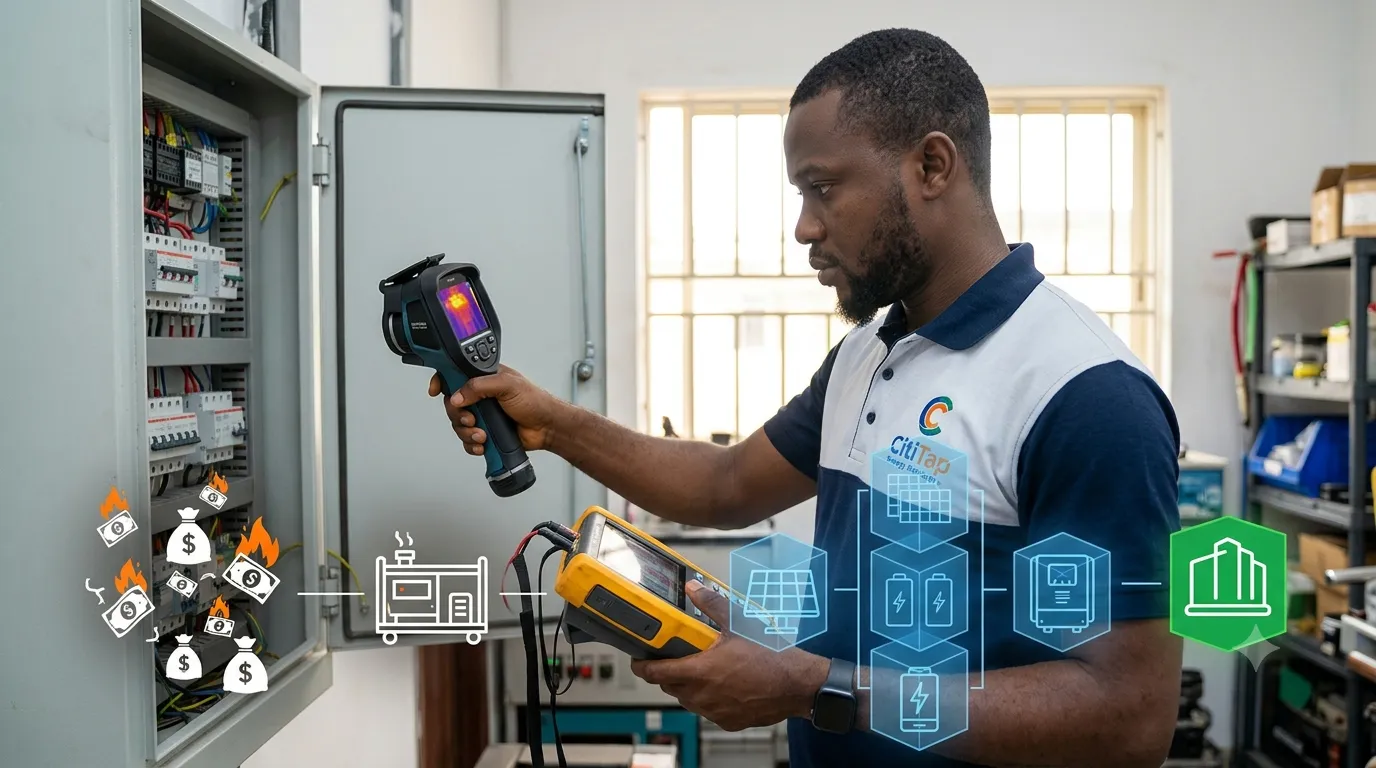
A business spending ₦250,000 monthly on diesel and generator maintenance burns ₦3 million a year — ₦15 million over five years, with nothing to show for it but a tired engine. Solar flips that equation: a properly sized hybrid system typically pays for itself within a few years, then produces effectively free daytime power for two decades. Panel warranties of 25 years are now standard, a point the International Renewable Energy Agency documents extensively.
Where Cheap Quotes Go Wrong
The most expensive solar system in Nigeria is the one installed twice. Undersized inverters, gel batteries sold as “lithium equivalent” and skipped load audits are the classic corners cut. If a quote arrives before anyone has measured your consumption, treat it as fiction with a price tag.
Lithium or Gel? A One-Paragraph Answer
Lithium costs more upfront, cycles deeper, lasts far longer and tolerates Nigerian heat better. Gel is cheaper today and dearer over ten years. For most homes and businesses running daily cycles, lithium wins the arithmetic.
How to Get a Number You Can Trust
Insist on an energy audit first. A credible installer measures your load profile, designs to it, and shows you the sizing logic — panels, inverter rating, battery bank and expected autonomy — before naming a figure.
The cost of solar in Nigeria is ultimately a trade: predictable capital expense now versus unpredictable diesel forever. Want your number instead of an internet average? Book a free energy assessment and we will measure before we quote.